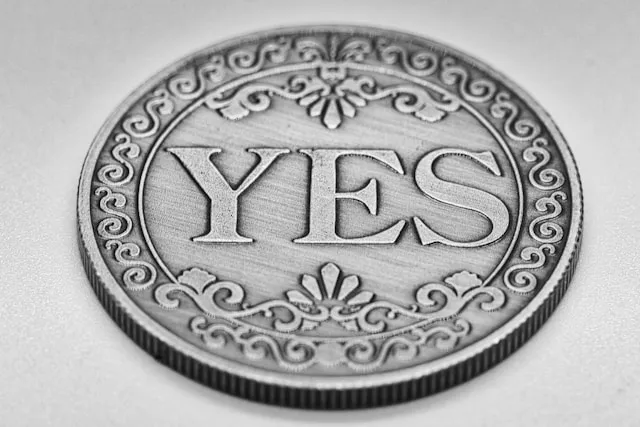
Physical tosses
A physical coin can be used to choose between two outcomes when either is acceptable.
 CoinToss
History
A coin toss is a familiar way to choose between two options. This page looks at its use in sport and selected historical accounts.
Try the coin toss
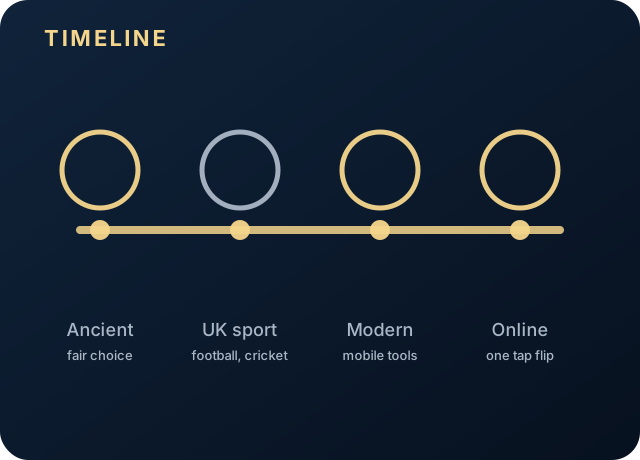
These examples show different settings where a toss can be used to choose between two outcomes.
A physical coin can be used to choose between two outcomes when either is acceptable.
Heads or tails is a familiar format for a quick, low-stakes choice.
Football and cricket turned the toss into a visible ritual. Captains still use a coin to decide who starts first or chooses an end.
Digital tools provide a heads-or-tails result in a browser without a physical coin.
Football and cricket both use a toss before play, while heads or tails is also used for everyday choices.
Under IFAB Law 8, the toss winner chooses which goal to attack in the first half or to take the kick-off.
Under MCC Law 13, the toss winner chooses whether their side bats or fields first.
For a low-stakes choice, a toss can pick between two outcomes when either is acceptable.
A toss can be used to assign an opening choice or, under some older competition rules, as a tie-break. Those are different uses and should not be conflated.
Under current IFAB rules, the pre-match toss winner chooses which goal to attack or to take the kick-off. A drawn match is resolved separately under the competition rules; a coin toss is not the current general tie-break procedure.
Procedures can change over time and differ between formats. When reading an account of a historical toss, identify the competition's rules for that date before comparing it with a modern opening toss.
A toss assigns an option; it does not establish why a team later won. Historical examples need match-level records as well as the relevant rules. See IFAB Law 8, IFAB Law 10, and the NFL's overtime rule history.
A physical flip can be affected by how the coin is launched and caught.
A physical toss depends on how the coin is launched and caught. Studies have found a same-side tendency under some tested methods, but those results are not a universal probability for every coin or toss.
For an explanation of the research and its limits, see the fairness page.
The phrase also appears in contemporary popular culture.
The 2019 Netflix series The Witcher featured the song “Toss a Coin to Your Witcher,” performed by Joey Batey as Jaskier.